

⚠️Important Legal Notice: All content within this article is for educational and informational purposes only. Please be aware that in many jurisdictions, the unauthorized use of equipment designed to jam radio communications (including anti-drone jammers) is strictly illegal and can lead to severe legal penalties. This information does not constitute legal advice. Users bear the sole responsibility for ensuring all actions and technological applications strictly comply with all applicable laws and regulations in their region.
Today, prison facilities worldwide must jam common mobile communication signals. They must also counter the increasing threat of illegal drones. If you are implementing a Prison Signal Jammer project, check the following key points before purchasing. This will help you avoid critical oversights.
Confirm the Required Jamming Frequencies in Advance
This may seem like a minor detail, but mistakes do happen. We have encountered cases where customers forgot to specify local 3G/4G frequencies on custom orders. They only realized the issue after the jammer was delivered, which led to project delays.
With nearly 200 countries and regions worldwide, communication technologies vary significantly. For example, 2G, 3G, 4G, and 5G standards differ across regions. Even within the LTE standard, China and the U.S. use different frequency bands. Additionally, with the increasing prevalence of drones, jamming frequencies such as 2.4GHz, 5.8GHz, and GNSS have become critical for prisons.
If you are unsure which frequencies your jail signal jammer should cover, consult your local telecom authority. Use frequency check websites for reference.
Set Realistic Expectations for Jamming Performance
When jamming mobile signals, you are effectively competing against communication base stations. In urban environments, base stations are densely deployed. Here, a jammer with 50W output typically covers only around 50 meters.
Significant variations still depend on surrounding conditions. This is different from drone jamming. Drone signals are transmitted between the drone and its remote controller at much lower power levels than mobile base stations. As a result, drone jamming can reach distances of several hundred meters to 1 km. Mobile signal jamming is much more limited.
Before purchasing a jammer, conduct a detailed assessment of the prison’s geographic environment, including its size, suitable installation locations, and the proximity of surrounding communication base stations. This will help determine the specifications required for your signal jammer.
Ensure the Prison Signal Jammer’s Design Can Withstand Outdoor Weather Conditions
Since jammers are deployed outdoors, they must be weather-resistant. Effective designs should include:
- Air intake vents on the sides with rainproof structures to prevent water ingress.
- Exhaust vents and connectors positioned at the bottom, perpendicular to the ground, to prevent rain from entering.
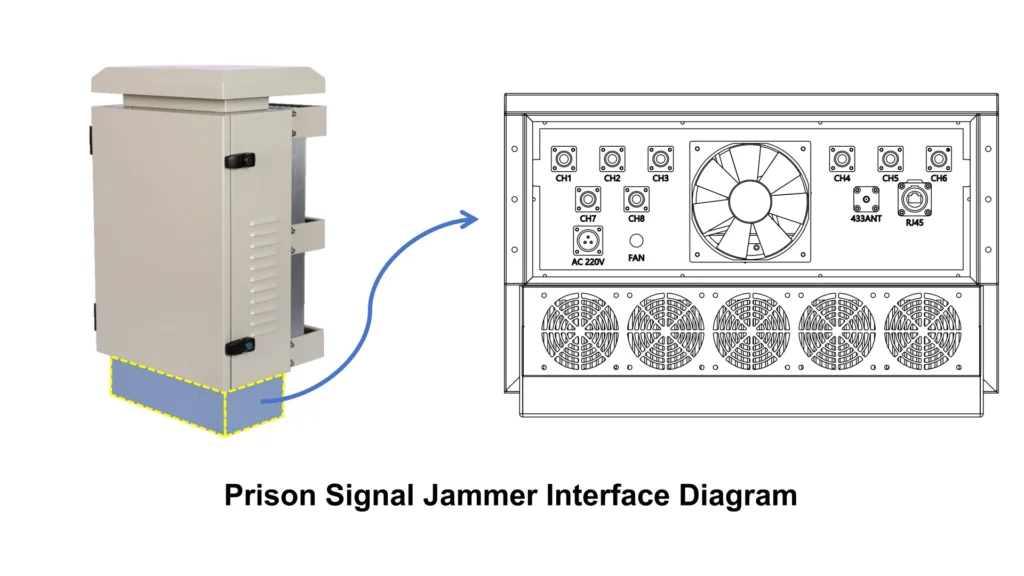
When purchasing, check whether the jammer incorporates these design features to ensure long-term reliability in various weather conditions.
Verify That the Prison Signal Jammer Can Operate 24/7 Without Interruption
Prisons require continuous signal control, meaning the jammer must be capable of 24/7 operation. This presents two key challenges: heat dissipation and power management.
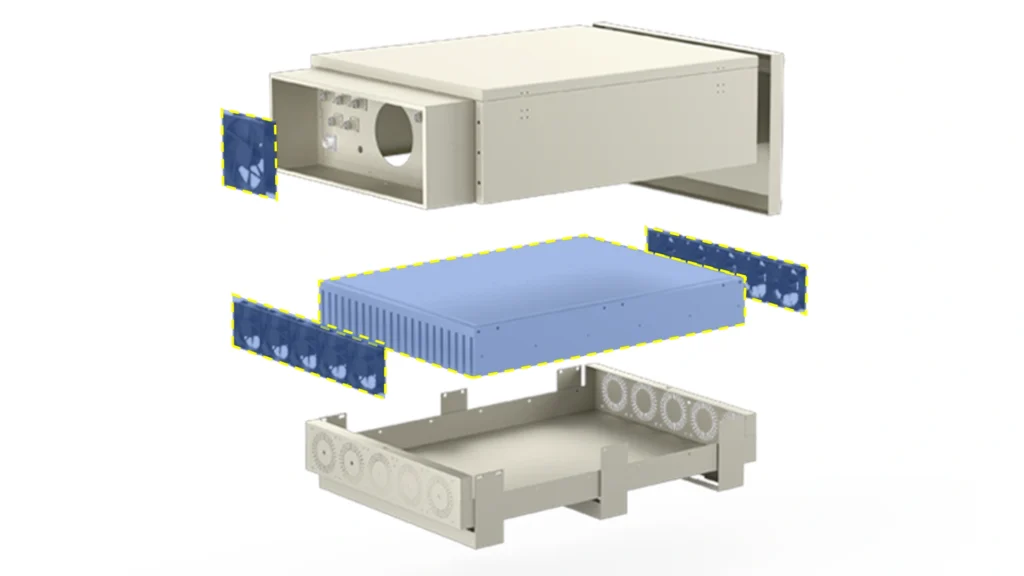
Heat Dissipation: The internal Signal Jammer Modules are the primary heat sources. These modules are mounted on a thick aluminum heat sink, which is exposed at the back of the enclosure. Fans at the top and bottom continuously blow air across the heat sink, while additional internal fans maintain safe operating temperatures.
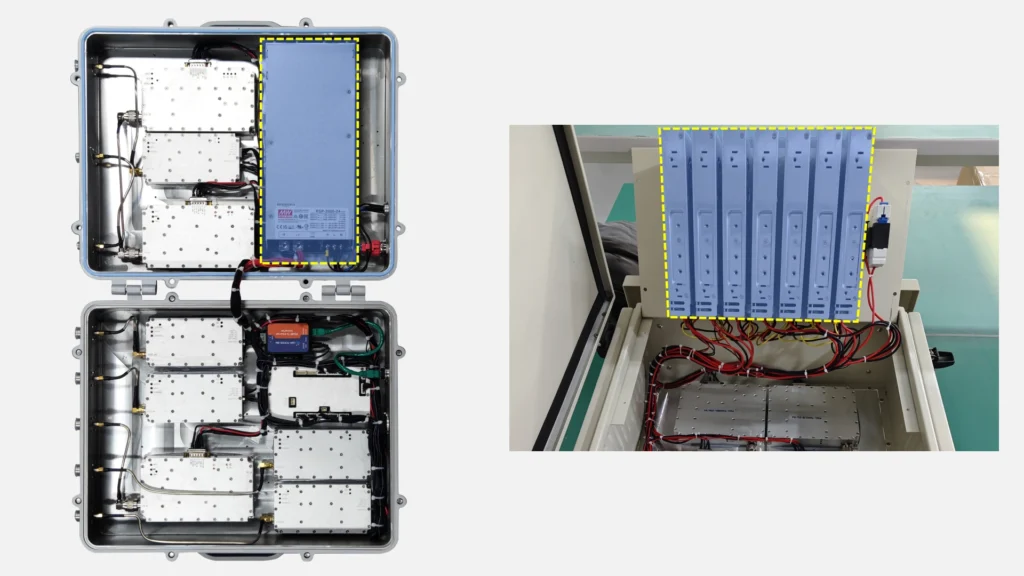
Power Supply: Prison Signal Jammers utilize Switched-Mode Power Supplies (SMPS) to convert AC 210V-240V power into DC 28V for RF modules. Unlike other types of jammers that rely on 1 or 2 SMPS, Prison Signal Jammers are designed with an independent SMPS for each RF module, greatly enhancing power supply redundancy and reliability.
Ensure the Jamming Device Has IoT Functionality
Prisons typically deploy multiple signal jammers, which should be networked via a Local Area Network (LAN) or the Internet for centralized control. According to Zorelock’s experience, this can be achieved using RJ45 Ethernet interfaces or 433MHz magnetic antennas for remote management.
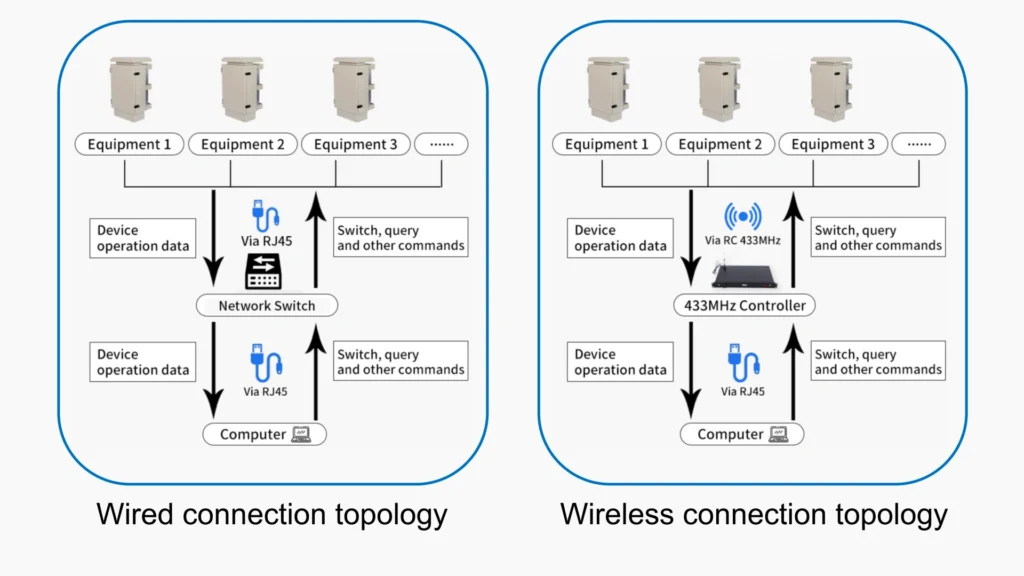
Magnetic antennas provide added security, as they prevent deliberate cable damage that could compromise jammer operation. However, for 433MHz remote control to function properly, the jammer itself must not interfere with this frequency, which could create jamming gaps. The best approach depends on the specific project requirements.
Choose a Supplier with Genuine Design and Manufacturing Capabilities
As the market evolves, more manufacturers are directly engaging with international clients. By working directly with a signal jammer factory, you benefit from:
Factory-Direct Pricing: Since 2023, Zorelock has been working directly with international buyers to help reduce procurement costs, accelerate market growth, and achieve mutual success.
Transparent Production Process & Quality Assurance: Zorelock operates two production facilities—one in Longhua, Shenzhen, which also serves as the business office, and another in Tangxia, Dongguan, covering a total area of 2,000㎡. We specialize in RF Power Amplifier Modules and Signal Jammer Devices, with extensive experience in Prison Signal Jammer manufacturing.
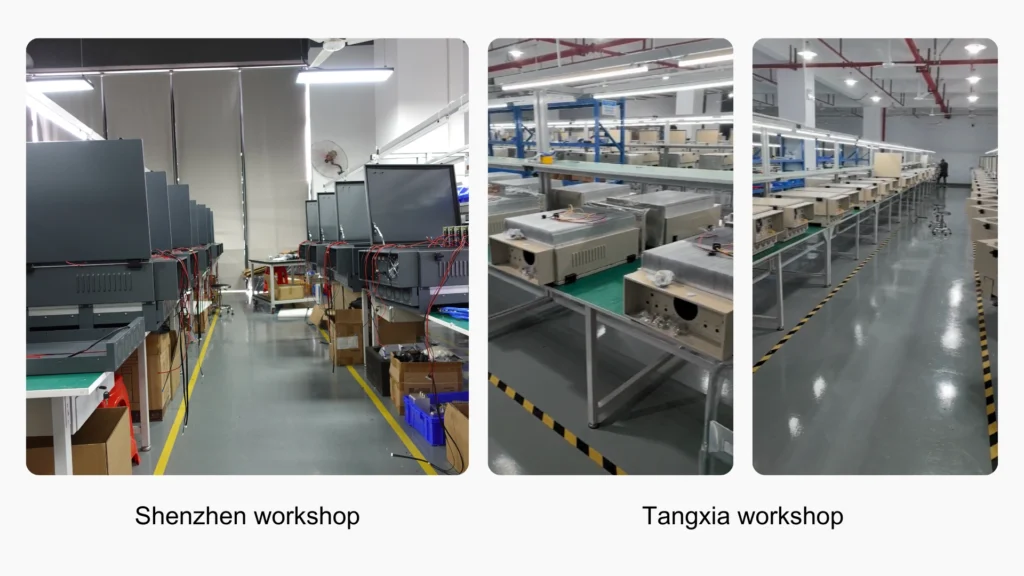
Technical Support for Project & Product Development: Zorelock’s expert team includes RF engineers for designing RF module circuits, as well as hardware and structural engineers for developing Signal Jammer Devices. If you need assistance with your project or product, contact us now and we offer custom design and remote collaboration solutions to support your success.